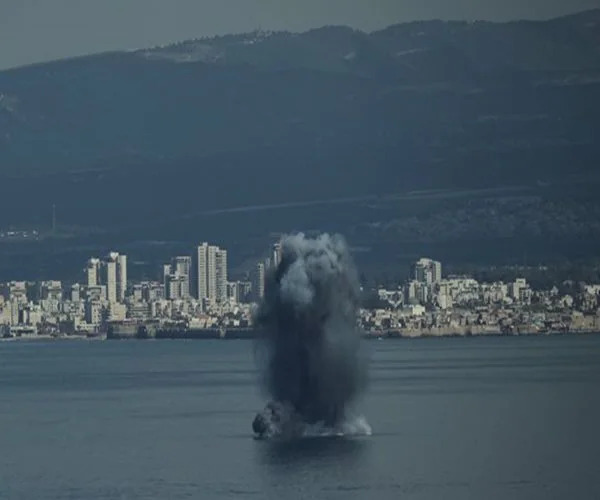
伊朗最高领袖被炸身亡后,伊朗周日誓言报复,并与以色列展开空袭,这场战争因前一天美国和以色列的突袭而不断扩大。
德黑兰发生爆炸,政府大楼附近升起滚滚浓烟。伊朗当局称,自美国和以色列空袭导致伊朗最高领袖哈梅内伊和其他高级领导人丧生以来,已有超过200人死亡。此前,伊朗向以色列和海湾阿拉伯国家不断扩大的目标发射导弹进行报复,而以色列则誓言对伊朗领导人和军方进行“不间断”打击。
在以色列,特拉维夫都能听到导弹撞击或拦截造成的巨响。 以色列救援部门称,在一次袭击中,位于中部城镇贝特谢梅什的一座犹太教堂遭到袭击,造成8人死亡、28人受伤,使该国死亡总人数上升至10人。
美国军方表示,自军事行动开始以来,已有3名美军士兵阵亡,另有5人重伤。这是目前已知的美军在冲突中伤亡的首批人员。
与此同时,伊朗总统马苏德·佩泽什基安在国家电视台播出的一段预先录制的讲话中表示,新的领导委员会已经开始工作。伊朗外交部长阿巴斯·阿拉格奇则表示,将在“一两天内”选出新的最高领袖。
这些空袭和反击凸显了哈梅内伊遇刺以及美国总统唐纳德·特朗普呼吁推翻这个存在了数十年的伊斯兰共和国,都可能导致一场旷日持久的冲突,并可能席卷整个中东地区。
这是八个月内美国和以色列第二次联手对伊朗动用武力。对于一位以“美国优先”纲领上台并誓言不卷入“无休止战争”的美国总统来说,这无疑是一次令人震惊的军事实力展示。
在六月持续12天的战争中,以色列和美国的空袭极大地削弱了伊朗的防空系统、军事领导层和核计划。 但统治伊朗三十余年的哈梅内伊遇刺身亡,造成了领导真空,加剧了地区不稳定的风险。
“你们已经越过了我们的红线,必须付出代价,”伊朗议会议长穆罕默德·巴格尔·卡利巴夫周日在电视讲话中说,“我们将给予你们毁灭性的打击,让你们自己都不得不乞求饶恕。”
特朗普警告说,任何报复行动只会导致局势进一步升级。
“他们最好别这么做,”特朗普在社交媒体上反击道,“如果他们胆敢这么做,我们将以前所未有的力量打击他们!”
此次袭击可能引发地区动荡,数百人周日冲击了位于巴基斯坦港口城市卡拉奇的美国领事馆。警方和准军事部队使用警棍并发射催泪瓦斯驱散人群,冲突造成至少9人死亡。
随着美国和以色列对伊朗发动空袭,伊朗也以导弹和无人机袭击对以色列以及驻有美军的邻近阿拉伯海湾国家进行报复。
这场空袭战可能动摇全球市场,尤其是如果伊朗使霍尔木兹海峡的商业航行变得不安全。全球约20%的石油贸易都要经过这条重要的水道,而油价本身就已注定波动。
据当局称,在以色列境内多次遭到袭击,造成至少10人死亡,120多人受伤。军方表示,许多导弹被拦截。
以色列国防部长伊斯拉埃尔·卡茨周日表示,以色列将对伊朗的军事和领导目标发动“不间断的空中打击”。
中东地区的航班受到影响,防空炮火在迪拜上空鸣响。作为阿联酋的商业首都,迪拜长期以来一直以动荡地区中的安全港湾自居,吸引着众多企业和外籍人士。
据阿联酋国家媒体报道,伊朗袭击阿联酋首都阿布扎比的弹片造成两人死亡,空中拦截产生的碎片引发了该市主要港口和标志性建筑帆船酒店外墙的火灾。
袭击还波及到阿曼——伊朗与西方长期保持对话的伙伴国,此前并未卷入冲突。
沙特阿拉伯谴责伊朗对其首都利雅得和东部地区的袭击,并表示已成功拦截了袭击。沙特强调,其领空和领土并未被用于袭击伊朗。
约旦称已“处理”了49架无人机和弹道导弹。科威特、巴林和卡塔尔也表示,他们在周日上午拦截了这些飞行物。
伊朗外长指责美国和以色列发动了战争,并称伊朗军队“在某种程度上处于孤立状态”,只能执行事先下达的命令。他还表示,已与海湾国家的外长通话,敦促他们向美国和以色列施压,结束战争。
自1989年以来,作为最高领袖,哈梅内伊对所有重大政策拥有最终决定权。他领导着伊朗的宗教机构和革命卫队,这两个机构是这个神权统治国家的主要权力中心。
尽管特朗普周六呼吁伊朗人民“接管”政府,但德黑兰或其他地方并未出现任何动乱迹象。
据伊朗国家电视台报道,伊朗南部一所女子学校遭到袭击,造成至少115人死亡,数十人受伤。
以色列军方发言人纳达夫·肖沙尼中校表示,他并不知晓以色列或美国在学校附近发动的任何袭击。美国中央司令部发言人蒂姆·霍金斯上尉表示,他已注意到这些报道,官员们正在对此进行调查。
伊朗国家通讯社伊通社(IRNA)援引拉梅尔德州州长阿里·阿里扎德的话说,西南部至少有15人丧生,其中一座体育馆、两处居民区和一所学校附近的礼堂遭到袭击。
随着哈梅内伊死亡的消息陆续传出,德黑兰的目击者告诉美联社,一些居民欢呼雀跃,在屋顶上呐喊,吹口哨,发出尖叫。
在马什哈德,哀悼者在伊玛目礼萨陵墓升起了黑旗。伊朗政府宣布全国哀悼40天,并设立7天全国公共假日,以纪念哈梅内伊的逝世。
半官方的法尔斯通讯社援引未具名消息人士的话报道称,哈梅内伊的几位亲属也在袭击中丧生,其中包括他的女儿、女婿、儿媳和孙辈。
近几周来,随着特朗普政府在中东地区集结数十年来规模最大的美国军舰和飞机力量,紧张局势急剧升级。总统坚称他希望达成一项限制伊朗核计划的协议,而此时伊朗正因全国范围内的抗议活动而面临日益高涨的反对声浪。
民主党人谴责特朗普未经国会授权就采取行动。白宫则表示,他们事先已向国会的多位共和党和民主党领导人进行了简报。
尽管特朗普去年宣称伊朗核计划已被摧毁,但据一位不愿透露姓名的美国高级官员透露,伊朗正在重建其失去的基础设施。这位官员在匿名的情况下向记者透露了特朗普的决策过程。他表示,情报显示伊朗已经具备生产高质量离心机的能力,这是制造武器所需高浓缩铀的重要一步。
伊朗方面表示,自去年6月以来,该国没有进行过铀浓缩活动——尽管伊朗一直坚称其拥有进行浓缩活动的权利,并声称其核计划完全是和平的。 伊朗还阻止国际核查人员前往美国轰炸过的地点。美联社分析的卫星照片显示,其中两个地点出现了新的活动,表明伊朗正试图评估并可能回收相关物资。
Iran vowed revenge Sunday after the killing of its supreme leader and traded strikes with Israel as part of a widening war prompted by a surprise U.S. and Israeli bombardment a day earlier.
Blasts in Tehran sent a huge plume of smoke into the sky in an area where there are government buildings. Iranian authorities say more than 200 people have been killed since the start of the U.S. and Israeli strikes that killed Ayatollah Ali Khamenei and other senior leaders. Earlier, Iran fired missiles at an ever-widening list of targets in Israel and Gulf Arab states in retaliation while Israel pledged “non-stop” strikes against Iran’s leaders and military.
In Israel, loud explosions caused by missile impacts or interceptions could be heard in Tel Aviv. Israel’s rescue services said eight people were killed and 28 wounded in a strike that hit a synagogue in the central town of Beit Shemesh, bringing the overall death toll in the country to 10.
The U.S. military said three service members have been killed and five others seriously wounded since the operations began. They are the first known American casualties from the fighting.
Meanwhile, Iran’s President Masoud Pezeshkian said in a prerecorded message aired on state television that a new leadership council had begun its work, and Iran’s Foreign Minister Abbas Araghchi said a new supreme leader would be chosen in “one or two days.”
The strikes and counterattacks underscored how the killing of Khamenei, and U.S. President Donald Trump’s calls for the overthrow of the decades-old Islamic Republic, carried the potential for a prolonged conflict that could envelop the Middle East.
It’s the second time in eight months that the U.S. and Israel have teamed up to use military force against Iran, and a startling show of military might for an American president who swept into office on an “America First” platform and vowed to keep out of “forever wars.”
In the 12-day war in June, Israeli and American strikes greatly weakened Iran’s air defenses, military leadership and nuclear program. But the killing of Khamenei, who had ruled Iran for more than three decades, creates a leadership vacuum, increasing the risk of regional instability.
“You have crossed our red line and must pay the price,” Iran’s parliamentary speaker, Mohammad Bagher Qalibaf, said in a televised address Sunday. “We will deliver such devastating blows that you yourselves will be driven to beg.”
Trump warned that any retaliation would only lead to further escalation.
“THEY BETTER NOT DO THAT,” Trump fired back in a social media post. “IF THEY DO, WE WILL HIT THEM WITH A FORCE THAT HAS NEVER BEEN SEEN BEFORE!”
In a sign of how the attack could stoke regional unrest, hundreds of people stormed the U.S. Consulate in Pakistan’s port city of Karachi on Sunday. Police and paramilitary forces used batons and fired tear gas to disperse the crowd, and at least nine people were killed in the clashes, authorities said.
As U.S. and Israeli strikes have pounded Iran, the Islamic Republic has retaliated with missiles and drone attacks on Israel and nearby Arab Gulf countries hosting U.S. forces.
The air war could rattle global markets, particularly if Iran makes the Strait of Hormuz unsafe for commercial traffic. Around 20% of the world’s traded oil passes through the vital waterway, and oil prices are already set for swings.
In repeated barrages across Israel, at least 10 people were killed and more than 120 injured, according to authorities. Many missiles were intercepted, the military said.
Israel’s Defense Minister Israel Katz said Sunday that Israel will have “a non-stop air train” of strikes against military and leadership targets in Iran.
Flights across the Middle East were disrupted, and air defense fire thudded over Dubai. The United Arab Emirates’ commercial capital has long drawn business and expatriates by billing itself as a safe haven in a volatile region.
Shrapnel from Iranian attacks on the Emirates’ capital of Abu Dhabi killed two people, state media said, and debris from aerial interceptions caused fires at the city’s main port and on the facade of the iconic Burj Al Arab hotel.
Attacks also extended into Oman — Iran’s longtime interlocutor with the West that hadn’t been drawn into the fray previously.
Saudi Arabia condemned Iran’s attacks on its capital, Riyadh, and eastern region, saying it had successfully intercepted them. The kingdom noted that it had not allowed its airspace or territory to be used to target Iran.
Jordan said it “dealt with” 49 drones and ballistic missiles. Kuwait, Bahrain and Qatar also said they had intercepted projectiles Sunday morning.
Iran’s foreign minister blamed such strikes on the U.S. and Israel for starting the war. He said Iran’s military units are “somehow isolated” and acting on orders given in advance. He said he had spoken to his counterparts in the Gulf countries and urged them to pressure the U.S. and Israel to end the war.
As supreme leader, Khamenei had final say on all major policies since 1989. He led Iran’s clerical establishment and the Revolutionary Guard, the two main centers of power in the governing theocracy.
Though Trump called on Saturday for the Iranian people to “take over” their government, there was no sign in Tehran or elsewhere of unrest.
In southern Iran, at least 115 people were reported killed when a girls’ school was struck, and dozens more were wounded, the local governor told Iranian state TV.
Lt Col Nadav Shoshani, an Israeli military spokesperson, said he was not aware of any Israeli or American strikes in the area of the school. U.S. Central Command spokesperson Capt. Tim Hawkins said he was aware of those reports and that officials were looking into them.
Iran’s state news agency IRNA said at least 15 people were killed in the southwest, quoting the governor of the Lamerd region, Ali Alizadeh, as saying a sports hall, two residential areas and a hall near a school were hit.
As reports trickled out about Khamenei’s death, eyewitnesses in Tehran told The Associated Press that some residents were rejoicing, cheering from rooftops, blowing whistles and letting out ululations.
Mourners raised a black flag over the Imam Reza shrine in Mashhad and the Iranian government declared 40 days of public mourning and a seven-day nationwide public holiday to commemorate Khamenei’s death.
Citing unidentified sources, the semiofficial Fars news agency reported that several relatives of Khamenei were also killed, including a daughter, son-in-law, daughter-in-law and grandchild.
Tensions have soared in recent weeks as the Trump administration built up the largest force of American warships and aircraft in the Middle East in decades. The president insisted he wanted a deal to constrain Iran’s nuclear program while the country struggled with growing dissent following nationwide protests.
Democrats decried that Trump had taken action without congressional authorization. The White House said it had briefed several Republican and Democratic leaders in Congress in advance.
Though Trump had pronounced the Iranian nuclear program obliterated in strikes last year, the country was rebuilding infrastructure that it had lost, according to a senior U.S. official who spoke to reporters on condition of anonymity to discuss Trump’s decision-making process. The official said intelligence showed that Iran had developed the capability to produce its own high-quality centrifuges, an important step in developing the highly enriched uranium needed for weapons.
Iran has said it has not enriched since June — though it has maintained its right to do so while saying its nuclear program is entirely peaceful. It has also blocked international inspectors from visiting the sites the U.S. bombed. Satellite photos analyzed by AP have shown new activity at two of those sites, suggesting Iran is trying to assess and potentially recover material.